American-made, Stainless Steel Conveyors for a Variety of Industries
Packaging equipment cannot operate efficiently if products do not move smoothly between each process.
Fillers, sealers, labelers, inspection systems, case packers, and palletizers may perform different tasks, but they must function as one connected line. Packaging conveyors help coordinate that movement by controlling product speed, spacing, position, orientation, and accumulation.
Hanover Conveying Systems designs custom conveyors for packaging lines based on the product, package type, production rate, available floor space, sanitation requirements, and existing machinery. The goal is not simply to move products from one point to another. The conveyor system should support consistent production throughout the entire packaging process.
Packaging conveyors move products between machines while helping control how and when those products arrive.
Depending on the application, a conveyor system may be used to:
These functions help prevent problems such as product jams, tipped containers, damaged packaging, backed-up equipment, and inconsistent machine feeding.
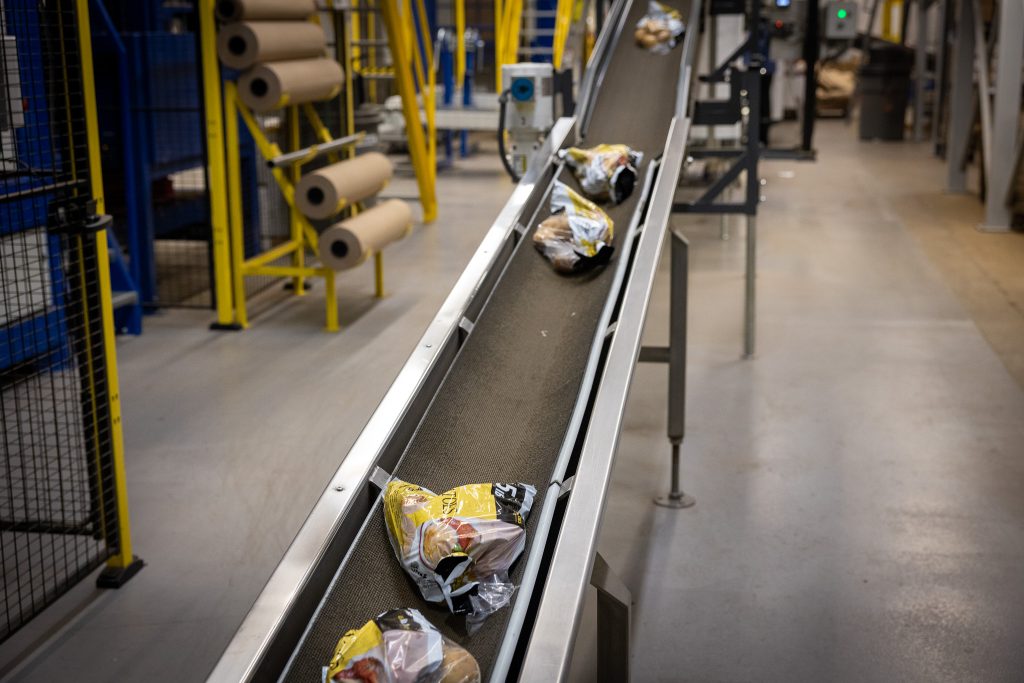
A packaging conveyor should help balance the line, not merely connect one machine to another.
Hanover Conveying Systems builds packaging conveyors for applications including accumulation, buffering, merging, positioning, singulation, bottomless pouch handling, machine conveyance, elevation changes, high-speed movement, orientation, turning, and tight-space routing.
Machine Infeed and Discharge
Packaging machines often require products to arrive at a specific speed, orientation, and distance apart.
An infeed conveyor can help organize products before they enter equipment such as:
Discharge conveyors move products away from the machine and prepare them for the next stage of production.
Poorly designed infeed and discharge sections can cause products to bunch together, arrive at an angle, or enter faster than the equipment can process them.
Product Spacing and Positioning
Products do not always leave one machine in the position required by the next.
A packaging conveyor may need to rotate a case, turn a container, lay a product down, stand it upright, or align its leading edge before the next process. Custom conveyor solutions can also support 90-degree transfers, product rotation, elevation changes, and other movements required by complex packaging layouts.
Reliable orientation is especially important before labelers, robotic cells, case sealers, and palletizing systems.
Accumulation and Buffering
Packaging equipment may pause briefly because of carton changes, labeling errors, product inspections, or normal machine cycles.
An accumulation conveyor temporarily stores products while downstream equipment slows or stops. This allows upstream machinery to continue running for a limited period instead of stopping the entire packaging line immediately.
The appropriate amount of accumulation depends on:
Some packages can accumulate with light contact. Fragile products, flexible packaging, and easily damaged labels may require low-pressure or zero-pressure accumulation.
Inspection and Product Rejection
Conveyors can move products through quality-control equipment without interrupting production.
Packaging lines may use sensors, cameras, scanners, checkweighers, or metal detectors to identify issues such as:
Products that fail inspection can be diverted into a reject lane while acceptable products continue through the line.
Merging and Diverting
Packaging facilities often need to combine products from several machines or route products toward different destinations.
Merging and diverting conveyors can be used to:
The conveyor design must account for product speed, size, stability, and lane capacity to avoid creating a bottleneck.
Inclines, Declines, and Elevation Changes
Packaging equipment is not always positioned at the same height.
Incline, decline, Z-frame, spiral, and vertical conveying solutions can connect equipment at different elevations while using available overhead or floor space efficiently.
Elevation conveyors can be especially useful when a facility needs to:
The belt surface, incline angle, product center of gravity, and side-guiding strategy must all be considered to prevent sliding or tipping.
End-of-Line Case Handling
After products are packed into cartons, cases, trays, or totes, conveyors move them toward final sealing, labeling, inspection, palletizing, and shipping.
End-of-line conveyor systems may need to:
This stage requires close coordination between the conveyor, controls, sensors, and robotic equipment.
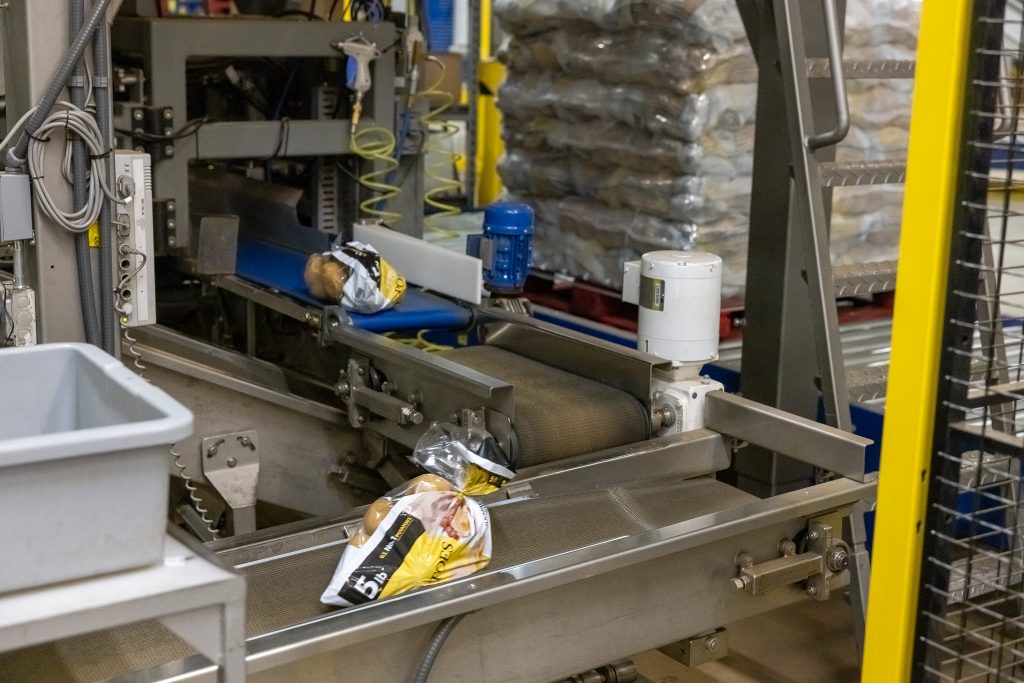
The right conveyor depends on the package, production environment, required movement, and cleaning requirements.
Fabric Belt Conveyors
Fabric belt conveyors provide a continuous carrying surface and can handle boxes, bags, cartons, trays, and loose products.
They are commonly used for:
Different belt surfaces can provide more grip, easier release, or better resistance to moisture, oil, temperature, and wear.
Plastic Modular Belt Conveyors
Plastic modular belts are made from interlocking plastic sections driven by sprockets.
They are often selected for packaging applications that require:
Plastic modular belts can be configured for straight runs, curves, inclines, declines, and complex production layouts.
Tabletop Chain Conveyors
Tabletop chain conveyors are frequently used for upright containers such as bottles, cans, jars, and cartons.
They are well suited for:
Side guides and transfer points must be designed carefully to keep tall or narrow containers stable.
Monolithic Belt Conveyors
Monolithic belts have a solid, homogeneous construction that can support easier cleaning and contamination control.
They may be used in food, beverage, pharmaceutical, cosmetic, and other packaging environments where sanitation is an important design consideration.
Product and Package Characteristics
The design process should begin with the product.
Important details include:
A flexible pouch requires a different conveyor and transfer design than a rigid corrugated case. A tall bottle requires different guiding than a flat carton.
Required Production Rate
Conveyor speed should support the required production rate while maintaining product stability.
The design should consider units per minute, machine cycle times, product spacing, batch sizes, and changes in production speed.
The fastest conveyor is not always the best conveyor. A balanced system delivers products at a rate each packaging machine can consistently accept.
Available Floor Space
Packaging lines often need to fit around existing machinery, walls, columns, walkways, utilities, and work areas.
A custom conveyor layout may include:
The layout should also preserve access for employees, cleaning, maintenance, and product changeovers.
Sanitation and Construction Materials
The required conveyor construction depends on the production environment.
Packaging conveyors may use painted steel, stainless steel, sanitary welding, washdown components, or specialized belting based on cleaning procedures and product exposure.
Facilities handling food, beverages, pharmaceuticals, or personal-care products may have stricter requirements than facilities moving sealed cartons or finished cases.
Controls and Sensors
Packaging conveyors must communicate with the equipment around them.
Sensors, variable frequency drives, pneumatic components, encoders, inspection systems, and programmable controls can manage:
Controls should be considered early in the design process so the mechanical and electrical systems work together.
Packaging conveyors are often part of a larger automated system.
PennAir, a sister company of Hanover Conveying Systems, provides industrial automation, pneumatics, sensors, controls, UL 508A control panels, aluminum extrusion, and ABB robotics.
ABB robots can be incorporated into packaging lines for applications such as:
The conveyor must present products to the robot in a predictable position, orientation, and sequence. This may require sensors, encoders, vision systems, controlled spacing, or accumulation zones.
PennAir can also support the pneumatic and electrical components used throughout the packaging line, while Hanover Conveying Systems focuses on the conveyor, frame, guarding, and mechanical layout.
Packaging equipment that relies heavily on compressed air may also benefit from support through Compressor Maintenance Co. Pneumatic cylinders, valves, actuators, vacuum devices, and robotic grippers require reliable air pressure and properly treated compressed air.
When replacement machine components, fixtures, or custom tooling are needed, Capitol Tool can provide precision machining and reverse-engineering support.
Together, these capabilities allow manufacturers to address conveyors, robotics, controls, pneumatics, compressed air, and precision components through The Conrad Company family of businesses.
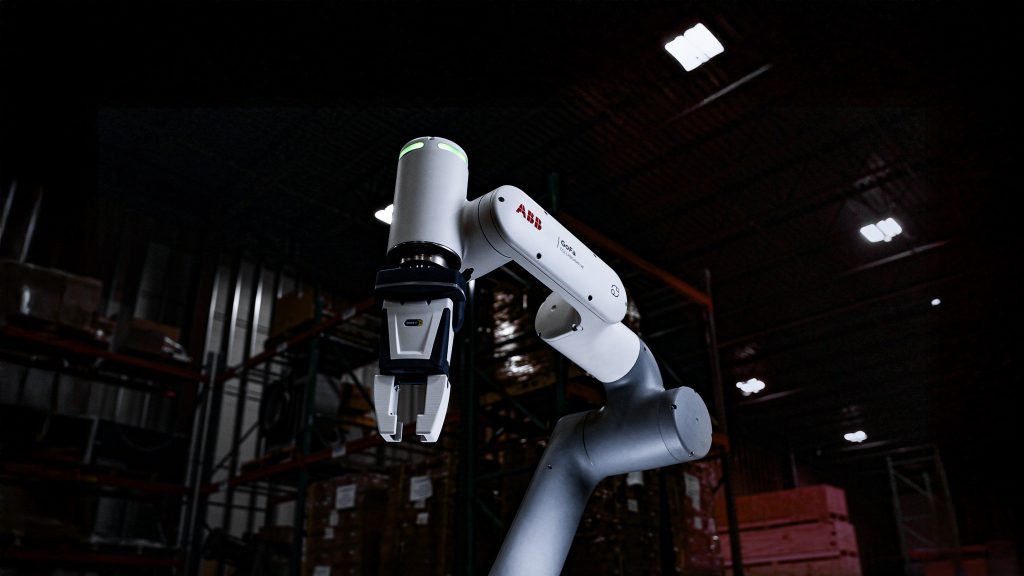
A packaging conveyor should be designed as part of the complete production process, not treated as a stand-alone piece of equipment.
Hanover Conveying Systems designs and manufactures custom conveyor systems for packaging applications including:
Each system can be designed around the product, required throughput, available floor space, cleaning procedures, controls, and equipment already operating in the facility.
We’re looking forward to working with you. Whether you have questions about products or services, our team is ready to help.
The best conveyor depends on the package size, weight, material, production speed, layout, sanitation requirements, and required movement. Common options include fabric belt, plastic modular belt, tabletop chain, and monolithic belt conveyors.
Conveyors improve efficiency by feeding machines consistently, maintaining product spacing, reducing manual handling, accumulating products during brief stops, and coordinating movement between packaging processes.
An accumulation conveyor temporarily stores products when downstream packaging equipment slows or stops. This helps prevent every machine on the line from stopping at the same time.
Bottle stability can be improved with properly positioned side guides, smooth transfers, controlled speed changes, suitable belt surfaces, and gradual curves. The bottle height, base size, weight, and center of gravity must also be considered.
Yes. A custom conveyor can often be designed around existing machinery, columns, walls, walkways, and available floor space. Accurate measurements and machine interface information are important when modifying an existing line.
Conveyors position, space, and present products so the robot can pick or place them consistently. Sensors, encoders, machine vision, and controls may be used to coordinate the conveyor with the robot.
Cost depends on the conveyor length, width, belt type, construction material, controls, guarding, transfers, sanitation requirements, installation needs, and overall system complexity.